


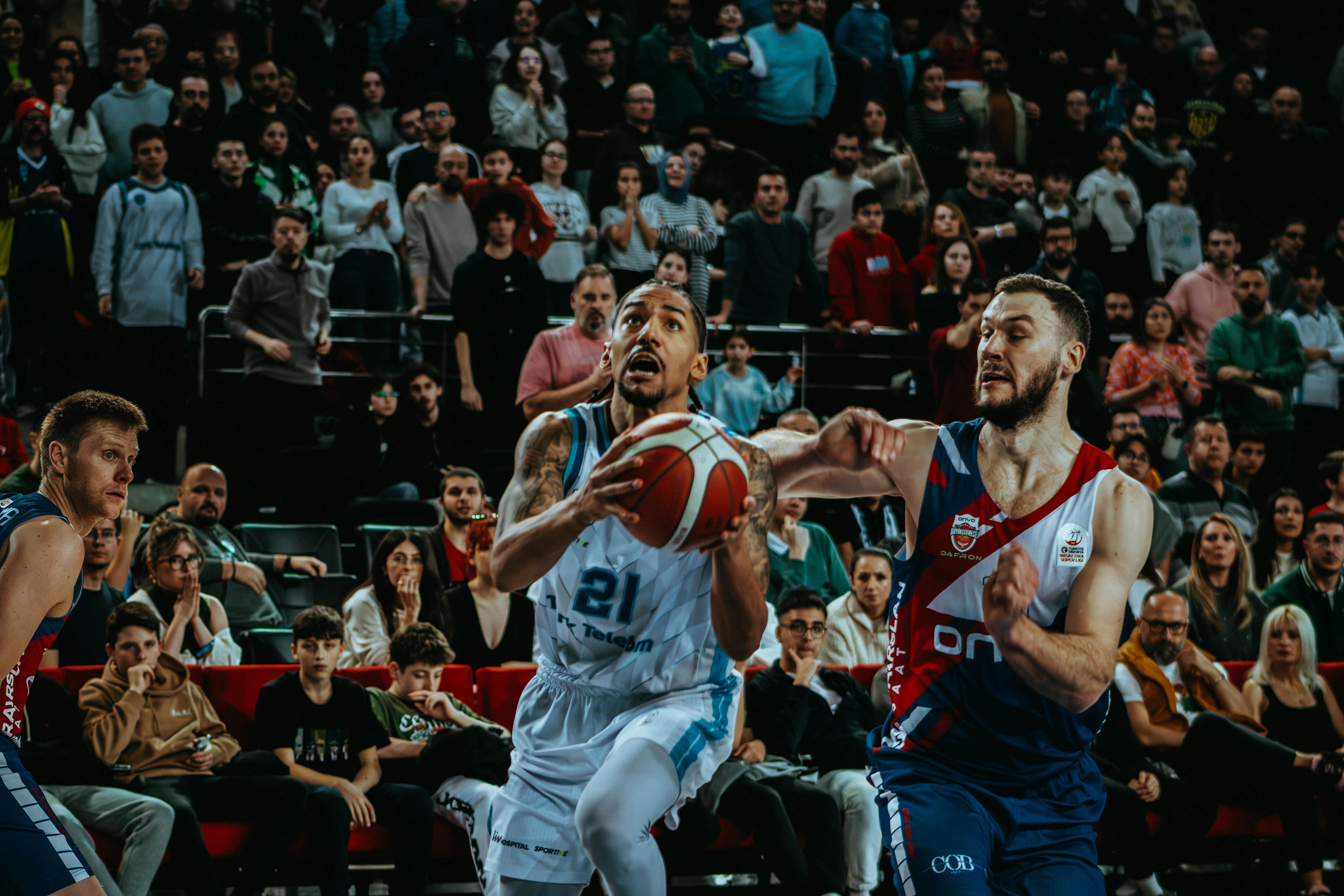
A basketball player’s success on the court is dependent on the status of four pillars of performance: Physical, technical, tactical and psychological. Players who are consistently proficient in applying their athleticism (Physical), skills (Technical), knowledge of the game (Tactical), and mental (Psychological) approach will achieve in success.
These basketball performance pillars are dependent on each other. For example, increasing athletic ability through training supports greater skill development.

Figure 1
Jumping higher and accelerating faster allow a player to practice shooting from a greater distance, to be stronger with the ball, and to dribble at higher speeds. Physical fitness also sharpens the execution of game tactics and decision making. In the fourth quarter, as fatigue increases, the player with a fitter and more resilient body is more likely to make the smart play.
Training the physical pillar – what is commonly referred to as strength and conditioning – focuses on three interrelated factors: Body structure, movement and athleticism.

Figure 2
Body structure is the dimensions, composition, and form of the human body. This includes height, wingspan, body weight, and body fat percentage. It also includes how those dimensions, and their composition of bone, lean tissue (i.e., muscle and organ tissue), and fat. In other words, an athlete’s body type and posture. Within a performance plan, body structure affects exercise selection and an athlete’s movement potential.
On the court, body structure may dictate playing position or strengthen defensive prowess. For example, taller players tend to play frontcourt position and longer wingspans cover more area of a passing lane.
Movement involves the range of motion of joints (ankle, hip, shoulder, etc.) and the coordinated motion of the human body structure in controlled body weight tasks like walking, squatting, and lunging.
Movement gives insight into limitations or excesses of range of motion that may lead to compensation. On the court, this may take the form of a defender who cannot extend the arms overhead when trying to achieve “verticality” or a player who chooses to defend in a high stance, rather than a low stance.
Athleticism is the expression of movement with force and velocity. Jumping, sprinting, and agility form the foundation of explosive movement in basketball.
The ability to perform these explosive movements repeatedly, and recover from them, throughout the course of a game or training session represents an athlete’s fitness. While athletic expression is the pinnacle of the physical pillar, body structure and movement certainly have an influence on athleticism. Training can help improve a player’s athleticism.
A weaker athlete may need time in the weight room. An athlete who needs six weeks to recover from an ankle injury may need to focus on his fitness with treadmill training sessions. On the court, athleticism is demonstrated every time a player explodes to the rim, changes direction on defence, and sprints in transition.
Header photo by Rumeysa Ersoy

Adapted from:
Complete Conditioning for Basketball
Bill Foran