


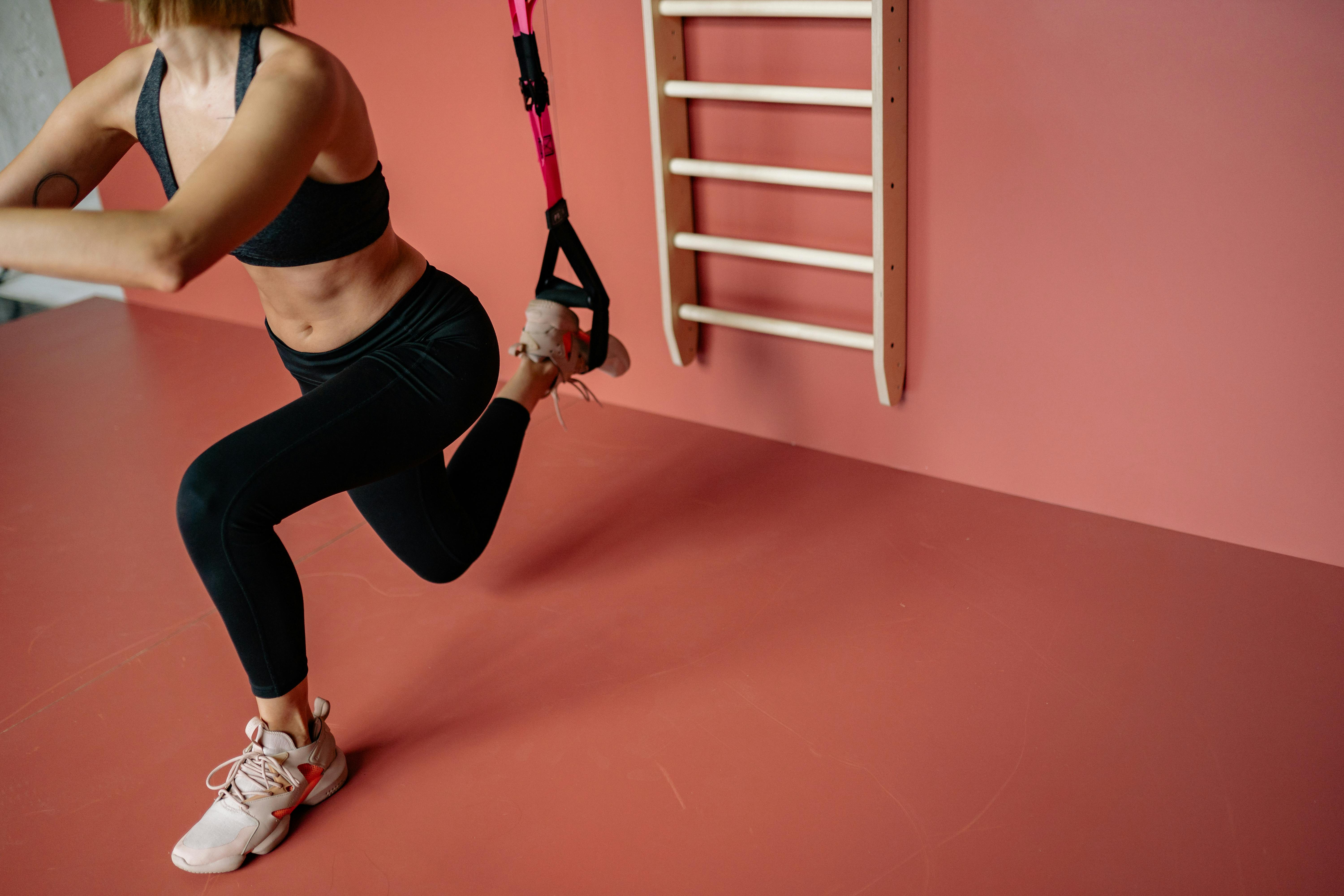
In today’s training world, you have multiple tools at your disposal to improve your strength, body composition, and performance. Barbells, dumbbells, kettlebells, medicine balls, and gym machines to train your muscles from every angle. All these tools are great, but one tool is often overlooked: your body weight.
You can benefit from bodyweight training in a variety of ways, including improved muscular coordination and endurance, better balance and body control, convenience, and accessibility.
Improved Muscular Coordination and Endurance
Muscular coordination refers to the distribution of muscular force among muscle groups involved in a given task, such as a bodyweight squat, walking, running, or performing a pull-up. Your muscle coordination influences how your muscles, joints, and tendons operate in a specific way. You might be able to do an excellent barbell squat, but then you get into a split stance and it’s a whole different ball game. Muscular endurance is the ability of muscles to contract over a long period of time.
There are two primary ways in which bodyweight training will improve your muscular coordination and endurance:
- Strengthening core and joint stability relative to your body weight. When your body is better at stabilizing itself through improved joint stabilization and core strength, fewer energy leaks or form variations occur during bodyweight exercises, sports, or daily activities. The less energy wasted, the better the technique and efficiency, and the better the training effect on the working muscles.
- Strengthening and engaging the body’s stabilizing muscles and improving muscular endurance. By improving stabilizer strength, the prime movers (such as the quads in a squat) will work better, more efficiently, and longer. Similarly, enhancing the stability and endurance of the core muscles can significantly improve performance in exercises such as push-ups.
Body Control and Balance
Body control and balance are often referred to in one word: proprioception. Proprioception is the awareness of your movement and body position in space. Proprioceptors, structures that sense body position, are within your muscles, tendons, and joints and directly affect your body’s control and balance. Have you ever fallen asleep in a chair and your head fell back and then suddenly snapped forward, waking you up? That’s proprioception in action.
When you perform bodyweight exercises, you improve your proprioception. Three systems are at play regarding body control and balance: visual, vestibular, and neuromuscular.
The visual system includes the eyes, optic nerves, and visual centers in the brain, and it is responsible for processing visual information and sending it to the brain. The vestibular system is located in the inner ear. The vestibular system’s primary role is to send information about the position of the head to the brain’s movement control center, the cerebellum. This is located at the back of the brain and ties into the visual system to stop objects from appearing too blurry when the head moves. The vestibular and visual systems support awareness of the body’s positioning in space.
The neuromuscular system comprises the skin, muscles, and connective tissues that send sensory information to the brain, increasing awareness of the body’s position in space and when environmental changes happen. For instance, the job of the ankle joints is to sense and respond to the ever-changing environment, such as from stairs, cracked and uneven sidewalks, or walking up and down hilly terrain. Being near the ground, the ankle joint is the first to sense what is going on, and it sends this information via the nervous system to the brain for processing and muscular response.
Convenience
The number one reason why people who are undecided about engaging in any resistance training program is time (or the lack of it). Some feel that for any workout to be effective, it needs to be done for 30 minutes or more and that a gym membership is required. However, bodyweight training overcomes this barrier. There is no need to drive to the gym and wait for someone else to finish their set. With bodyweight workouts, all that is needed is an exercise mat and a willingness to sweat, which means workouts can be done indoors, outdoors, or even in your hotel room if you travel. When it comes to convenience, bodyweight workouts cannot be beaten.
Accessibility
Bodyweight exercises are accessible to everyone, from the person at the start of their training journey to those who are more advanced. The magic of exercise regressions, progressions, and intensity techniques can make bodyweight exercises more challenging or more accessible as needed.
Take the bodyweight squat, for example. Beginners new to the squat may have difficulty squatting between their knees, instead squatting over their knees. This is solved by squatting to a box, which encourages using the hips and not the knees. However, bodyweight box squats are too easy for the advanced lifter; this is where progression and intensity techniques come in. By raising the arms overhead and slowing down the eccentric contraction, resistance and increased muscle tension are placed on the legs to challenge the advanced lifter. Progressions and regressions can be applied to most bodyweight exercises.
Header photo by Pexels

Adapted from:
The Bodyweight Blueprint
Brad Kolowich, Jr.