


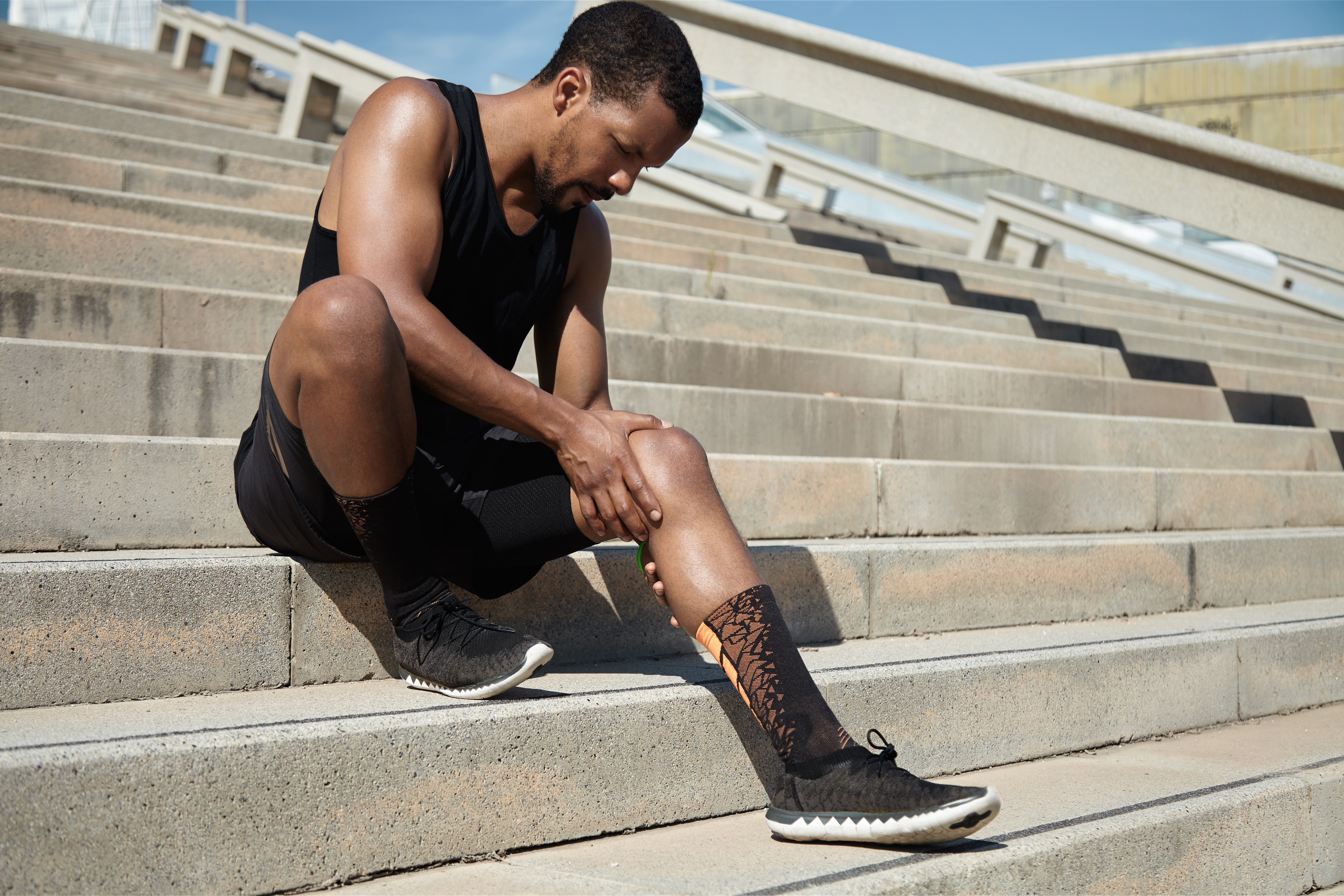
Overuse injuries are more common in endurance running than in other endurance sports such as road cycling, swimming, rowing, or cross-country skiing. This is because of the high rates of loading on lower-limb musculoskeletal structures since other types of endurance activities are mostly non-weight-bearing.
Research shows that half of runners suffer from an injury every year, and the most common ones are knee pain, Achilles tendinopathy, shin splints, calf strains, bone stress, and IT band syndrome. Middle and long-distance track runners tend to suffer more distal injuries to the foot, ankle, and lower leg, whereas recreational runners are more likely to suffer knee injuries.
Running injuries occur when there is an imbalance between the load that the runner is subjected to and the body’s capacity to resist it. However, the load applied to a runner might not always be related to running or different types of physical training. The possibility of running injuries can be positively or negatively influenced by psychological and lifestyle factors.
Runners should take a holistic and multifactorial approach to reducing injury risks. Listed below are characteristics and behaviours that increase the risk of injury. It is unlikely that any of these elements alone will result in an injury right away. But runners who display these characteristics frequently are at high risk of developing an injury in the short, medium term or re-injuring themselves. It is recommended that these be avoided or addressed in a priority manner, where possible, with the support of qualified coaches and sports medicine professionals.
Common Risk Factors for Running Injuries
- Large increase in volume or intensity of running (or new to running)
- Major change in running environment/terrain/surface and footwear for most of training
- Rapid weight loss
- Poor sleep quality and quantity (Less than 7 hours)
- Stressful life events, low mood, anxiety status
- Using single or old pair of running shoes
- Not doing strength and conditioning training
- Mild or excessive tightness or soreness
- Irregular menstrual cycles
- Modification of running technique
- Previous injuries with loss of strength or capacity
Each type of injury has different risk factors. The reasons behind running injuries vary from runner to runner and may be influenced by a variety of factors, including training, biomechanical factors, structural factors, psychological factors, and biological factors. These factors interact to influence acute and chronic fatigue, tissue damage and repair processes, and perceptions of pain, and therefore the health status of the runner.
Header photo by Freepik

Adapted from:
Developing Endurance
Ben Reuter and NSCA